
Does Foam Rolling Help Knee Pain?
[Updated April 2026]
It can help some people feel short-term relief, improve comfort, and make movement feel easier, but it is rarely the full solution on its own. For knee pain linked to running, patellofemoral pain, or iliotibial band irritation, foam rolling is best used alongside targeted strengthening, load management, and a proper physiotherapy assessment.
Quick summary
- Foam rolling may help reduce muscle tightness and short-term soreness around the hip, thigh, and knee.
- It does not “stretch” or lengthen the iliotibial band, as the ITB is a dense connective tissue structure.
- For runner’s knee and patellofemoral pain, strengthening the hip, gluteal, and quadriceps muscles is usually more important.
- Foam rolling may be useful before exercise if it helps you move more comfortably.
- If knee pain keeps returning, a physiotherapist can assess your movement, strength, training load, and recovery habits.
How can foam rolling help knee pain?
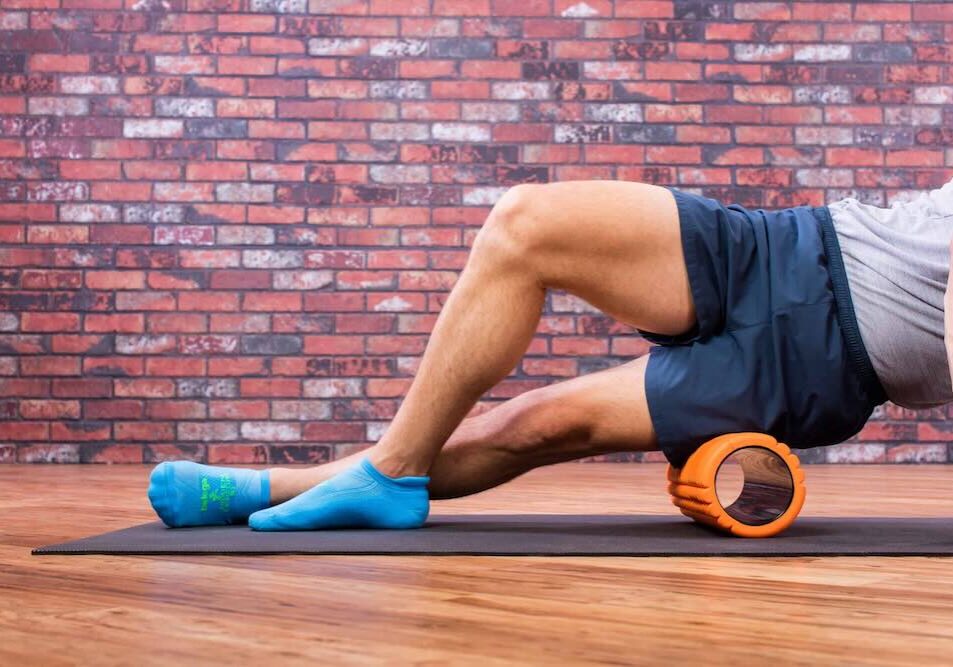
Foam rolling is a form of self-massage often used by runners, gym-goers, and active people to manage tightness and muscle soreness. Around the knee, people commonly use it on the quadriceps, hamstrings, calves, glutes, and outer thigh.
Foam rolling may help knee pain by:
- reducing short-term muscle sensitivity
- helping tight or overworked muscles feel more comfortable
- improving short-term range of movement
- supporting recovery after exercise
- making warm-ups feel easier before running, walking, gym work, or sport
However, foam rolling does not fix the underlying reason for most knee pain. If your knee pain is caused by poor load tolerance, strength deficits, changes in running volume, reduced hip control, or irritated joint structures, foam rolling may only provide temporary relief.
Foam rolling and runner’s knee
Runner’s knee is commonly used to describe pain around or behind the kneecap. Clinically, this is often called patellofemoral pain. It can be aggravated by running, stairs, squats, hills, lunges, or sitting for long periods with the knee bent.
Foam rolling may help if the muscles around the hip and thigh feel tight or sore, but it should not be the only treatment. Current evidence supports exercise-based care for patellofemoral pain, especially strengthening exercises for the hip and knee.
A well-rounded treatment plan may include:
- hip and glute strengthening
- quadriceps strengthening
- movement and running assessment
- load management
- mobility work where needed
- education around pain, training volume, and recovery
At Lilyfield Physiotherapy, our physiotherapy team can assess what is driving your knee pain and build a plan that helps you move with more confidence.
What is the iliotibial band?
The iliotibial band, often called the ITB, is a thick band of connective tissue that runs down the outside of the thigh from the pelvis to the lower leg. It helps support the hip and knee during walking, running, and other weight-bearing movements.
A common myth is that the ITB needs to be stretched or “released” with a foam roller. In reality, the ITB is not a muscle. It is a strong, fibrous structure that does not meaningfully lengthen from foam rolling.
This does not mean foam rolling is useless. Rolling the muscles around the ITB, such as the glutes, tensor fascia latae, quadriceps, and lateral thigh muscles, may still help reduce sensitivity and improve how the area feels. The key is to avoid treating foam rolling as the main fix for ITB-related knee pain.
Should you foam roll directly on the ITB?
You can foam roll the outer thigh lightly if it feels helpful, but rolling hard directly over the ITB is often painful and may not provide extra benefit. For many people, it is more useful to target the muscles that attach near the ITB and influence hip and knee control.
Better areas to focus on may include:
- glute muscles
- front of the thigh
- outer quadriceps
- calves
- hip flexors, if advised by your physiotherapist
If rolling causes sharp pain, bruising, numbness, tingling, or worsening symptoms, stop and seek professional guidance.
What does the research say about foam rolling?
Research on foam rolling has developed since this article was first written. The current evidence suggests foam rolling can help improve short-term range of movement and may assist with post-exercise muscle soreness. However, the evidence is less clear when it comes to reducing musculoskeletal pain as a standalone treatment.
A 2024 systematic review found limited evidence that foam rolling alone reduces pain intensity in people with acute or chronic musculoskeletal pain. Some trials showed benefit when foam rolling was added to exercise, but this does not mean foam rolling should replace rehabilitation.
For knee pain, this means foam rolling may be helpful as a supporting tool, but it works best when combined with a targeted program that addresses strength, movement control, training habits, and recovery.
How to use foam rolling for knee pain
If foam rolling feels useful for your knee pain, keep it simple and comfortable. You do not need to roll aggressively for it to be effective.
A simple foam rolling routine
- Roll each area for 30 to 60 seconds.
- Use slow, controlled pressure.
- Keep discomfort mild to moderate, not sharp or intense.
- Focus on the muscles around the hip, thigh, and calf.
- Follow it with movement or strengthening exercises.
When to use foam rolling
You may find foam rolling helpful:
- before exercise as part of a warm-up
- after activity to help with muscle soreness
- on rest days when your legs feel stiff or heavy
- before strengthening exercises if it helps you move more freely
Foam rolling should feel like it helps you move better, not like something you need to endure.
What should you do as well as foam rolling?
If your knee pain keeps returning, strengthening and movement retraining are usually more valuable than foam rolling alone. Your program should match your symptoms, activity level, and goals.
Helpful exercises may include:
- glute bridges
- side-lying hip strengthening
- step-downs
- split squats
- calf raises
- controlled squats
- running drills, if appropriate
These exercises need to be progressed carefully. Doing too much too soon can flare symptoms, while doing too little may not build enough strength to support long-term improvement.
Our exercise rehabilitation programs are designed to help you rebuild strength, improve confidence, and return to the activities you enjoy.
When should you see a physiotherapist for knee pain?
You should consider seeing a physiotherapist if your knee pain:
- lasts longer than one to two weeks
- keeps returning with running, stairs, or sport
- causes swelling, locking, catching, or giving way
- stops you from exercising normally
- is worsening despite rest and self-care
- started after a fall, twist, or sudden injury
A physiotherapist can assess your knee, hip, foot posture, strength, running or walking pattern, and training load. This helps identify why the pain is happening and what needs to change.
How Lilyfield Physiotherapy can help
At Lilyfield Physiotherapy, we take a practical, evidence-informed approach to knee pain. Your body was made to move, and our goal is to help you move with less pain, more confidence, and a clearer plan.
Your physiotherapist may help with:
- knee and lower limb assessment
- hands-on treatment where appropriate
- strength and mobility exercises
- running or walking advice
- training load management
- education on pain, recovery, and injury prevention
- safe foam rolling technique if it suits your condition
With over 40 years in the community and more than 100 years of combined team experience, Lilyfield Physio supports people of all ages to recover well and keep moving.
FAQs
Does foam rolling help knee pain straight away?
It may help some people feel short-term relief, especially if the pain is linked to muscle tightness or soreness. If the pain is coming from joint irritation, overload, weakness, or poor movement control, foam rolling alone is unlikely to fix it.
Can foam rolling fix runner’s knee?
No. Foam rolling may help with comfort, but runner’s knee usually needs a broader plan. Hip and knee strengthening, load management, and movement retraining are often more important for long-term improvement.
Should I foam roll my ITB?
You do not need to roll hard directly over the ITB. It is often more useful to roll nearby muscles such as the glutes, quadriceps, and outer thigh. If rolling the ITB is very painful, reduce the pressure or avoid that area.
How often should I foam roll for knee pain?
You can try foam rolling for 30 to 60 seconds per muscle group, a few times per week or before activity. It should feel helpful, not painful. If symptoms worsen, stop and speak with a physiotherapist.
Is foam rolling better before or after exercise?
It can be used before exercise if it helps you move more freely, or after exercise if it helps with muscle soreness. For knee pain, it is usually most effective when paired with strengthening exercises.
When is foam rolling not suitable?
Avoid foam rolling over areas with acute injury, significant swelling, bruising, numbness, skin irritation, suspected fracture, or unexplained pain. If you are unsure, get professional advice before continuing.
Need help with knee pain?
Foam rolling can be a useful tool, but it is only one part of knee pain management. If knee pain is holding you back from running, sport, stairs, gym training, or daily movement, our experienced physiotherapists can help you understand the cause and build a clear recovery plan.
Book an appointment with our physios in Inner West Sydney and take the next step toward moving with more confidence.
References
- Santos IS et al. Effects of foam roller on pain intensity in individuals with chronic and acute musculoskeletal pain: a systematic review of randomized trials. 2024.
- Skinner B et al. A systematic review and meta-analysis of the effects of foam rolling on range of motion, recovery and markers of athletic performance. 2020.
- Konrad A et al. Static Stretch Training versus Foam Rolling Training Effects on Range of Motion: A Systematic Review and Meta-Analysis. 2024.
- Pepper TM et al. The Immediate Effects of Foam Rolling and Stretching on Iliotibial Band Stiffness: A Randomized Controlled Trial. 2021.
- RACGP. Hip and knee strengthening exercises for patellofemoral pain.
