
Why Do Some People Age Better Than Others?

Some people remain active, independent and physically capable well into their 90s. Others find that everyday tasks become increasingly difficult, their walking slows, and recovery from illness or injury takes longer than it once did.
Why do people age so differently?
Part of the answer lies in a condition known as frailty. Despite being common, frailty remains poorly understood and is often recognised only after it has already begun to affect strength, mobility and independence.
The reality is that frailty rarely develops overnight. It often emerges gradually over many years, with subtle changes that can be easy to dismiss as simply “getting older”. Understanding early changes may provide an opportunity to take action before they have a major impact on quality of life.
Quick summary
- Frailty is not inevitable: It often develops gradually, with early changes appearing while someone is still active and independent.
- Recognise the early signs: Reduced strength, slower walking, fatigue, poor balance and unexplained weight loss are worth discussing with a healthcare professional.
- Appearance can be misleading: Frailty affects people of different shapes and sizes, and a steady weight can mask muscle loss.
- Strength and nutrition matter: Progressive resistance exercise and adequate nutrition may help slow the progression of frailty and improve physical function.
- Get individual guidance: An exercise physiologist can assess your strength, balance and mobility and develop an exercise plan suited to your needs.
What Is Frailty?
Frailty is a health condition that develops when the body’s physical reserves and mental sharpness gradually decline. Think of it as a reduction in your ability to cope with physical and mental stressors. A minor illness, a fall, or a short period of inactivity may have a much greater impact than it once would have.
Frailty does not mean someone is incapable, bedridden, or dependent on others. In fact, many people who are living independently and managing their day-to-day activities may already be experiencing the early stages of frailty without realising it.
Frailty Often Begins Earlier Than People Think
One of the biggest misconceptions about frailty is that it only affects very old adults. In reality, frailty often develops gradually over many years. Before someone becomes obviously frail, there is often a stage known as pre-frailty. During this stage, people are usually still independent and mobile. They may still drive, travel, care for grandchildren, and enjoy social activities. However, subtle warning signs may already be appearing. These changes can be easy to dismiss as “just getting older”, but they may indicate that the body is becoming less resilient than it once was.
Frailty exists along a spectrum. People may move gradually from being robust and active, to becoming pre-frail, and eventually frail if the underlying causes are not addressed. This is why recognising the early signs is so important.
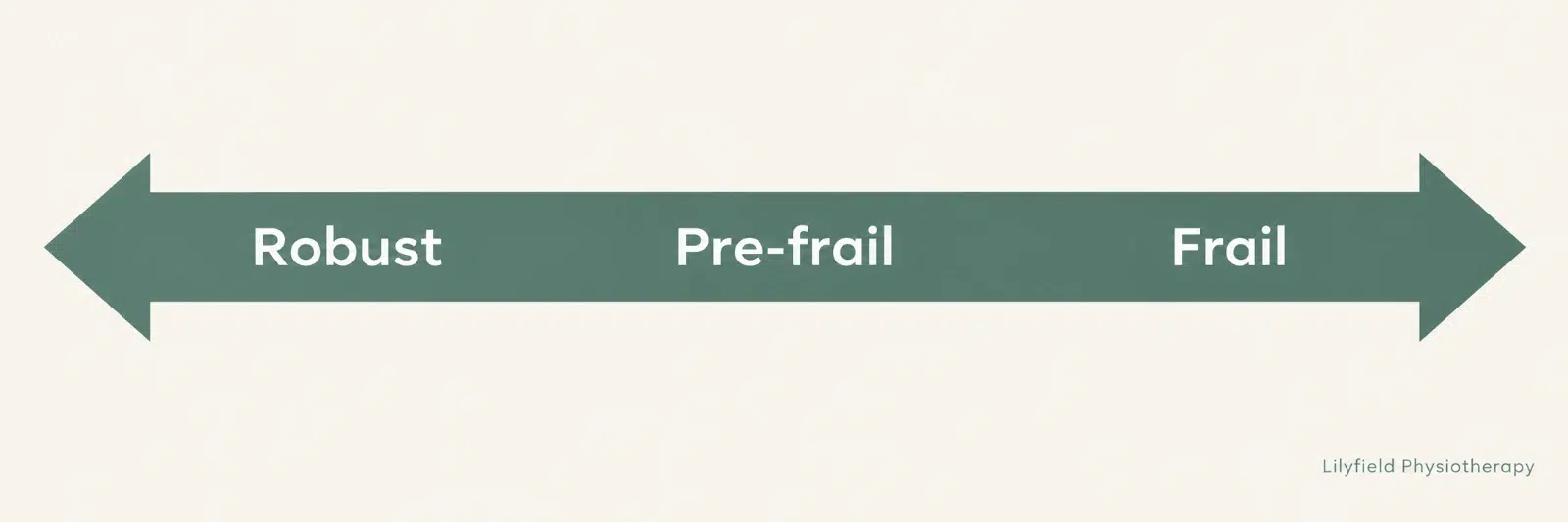
Frailty is also a dynamic state. People can go back and forth between being robust, pre-frail and frail at different stages of life. While factors such as illness, injury, inactivity, or poor health may accelerate the progression of frailty, appropriate interventions such as exercise, good nutrition, and management of underlying health conditions can help improve physical function and resilience.
This means that identifying frailty early may create an opportunity to slow, halt, or even reverse some aspects of decline.
Signs of Frailty You Shouldn’t Ignore
Frailty rarely announces itself with a single dramatic symptom. Instead, it tends to develop through a collection of small changes over time.
Some common signs include:
- Feeling weaker than you were a year ago
- Taking longer to recover after illness
- Falling sick or picking up infections more frequently
- Walking more slowly
- Difficulty climbing stairs
- Trouble getting out of a chair
- Finding everyday activities more tiring than before
- Reduced physical activity
- Loss of balance or confidence when walking
- Unexplained weight loss
- Falls or near-falls
Not everyone will experience all of these signs. However, if several of them sound familiar, it may be worth discussing them with a healthcare professional.
Why Strength Matters So Much
When people think about ageing, they often focus on managing medical conditions such as heart disease, diabetes or arthritis. What is sometimes overlooked is the importance of muscle strength.
Muscles play a critical role in almost everything we do, and become even more important as we advance in age. They help us climb stairs, carry groceries, walk safely, get out of bed, maintain our independence, reduce loss of appetite, and regulate hormones, blood sugar and brain function.
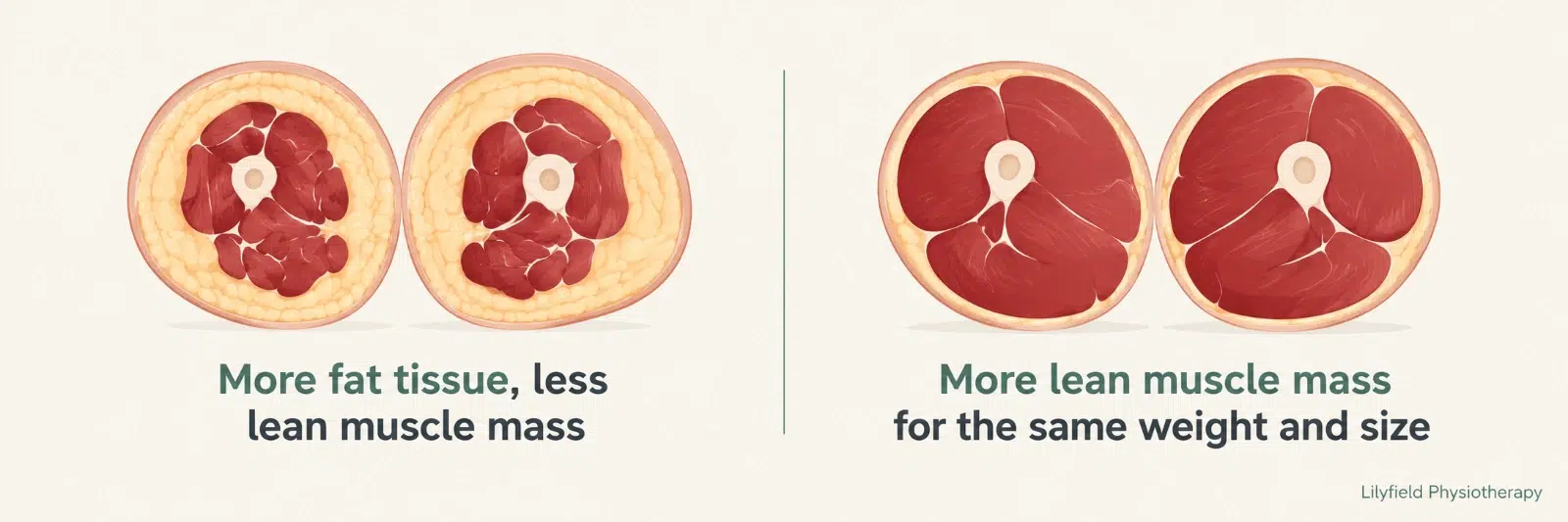
As we age, we naturally lose some muscle mass and strength. In older adults, a steady weight can often mask muscle loss, because muscle tissue may be replaced by fat tissue even when the number on the scales doesn’t change. Healthcare professionals refer to this progressive loss of muscle mass as sarcopenia. The term originates from the Greek words “sarco”, meaning flesh, and “penia”, meaning poverty: literally, “poverty of the flesh”.
Although the term sarcopenia may sound unfamiliar, the effects are easy to recognise. Reduced physical strength, slower walking speed, poorer balance, reduced exercise tolerance, and difficulty performing everyday tasks are common consequences. Importantly, muscle loss is one of the most treatable contributors to physical frailty.
While frailty can involve many aspects of health, maintaining and improving muscle strength is one of the most effective places to start.
Frailty Is More Than What You See
Another common misconception is that people with frailty appear physically thin or underweight. Some do, but in reality, frailty can affect people of many different shapes and sizes. Someone can appear healthy on the outside while experiencing significant losses in strength, stamina, and physical function. This is one reason why frailty often goes unrecognised.
The most important indicators are usually not appearance but rather changes in physical performance and daily function.
Questions such as:
- Am I walking slower than before?
- Am I becoming less active?
- Do everyday activities feel harder?
- Am I losing strength?
can be more helpful than simply looking in the mirror.
Frailty is not inevitable
One of the most encouraging things about frailty research is that there are actions people can take to prevent, slow or reverse frailty. Although we cannot stop ageing, we can influence how we age.
For many people, one of the most effective ways to address frailty is through progressive resistance training. This involves exercising muscles against sufficient resistance to stimulate strength gains and gradually increasing that challenge over time. Simply staying active is beneficial for overall health, but building strength often requires a more structured approach.
As strength improves, everyday activities get easier, and energy levels often improve as well. That makes it more realistic to stay active regularly, and people tend to move with more confidence, participate in social activities more, and stay independent for longer.
In many cases, restoring strength isn’t the final goal. It’s the foundation that makes everything else possible.
Good nutrition is equally important. Muscles require adequate nutrition, particularly sufficient protein, to maintain and build strength. Simple lifestyle changes, when introduced early, may help reduce the progression of frailty and improve physical function.
Why Early Action Matters
People often seek help only after a significant decline has occurred.
Perhaps they have experienced a fall, stopped participating in activities they enjoy, become noticeably weaker or experienced a decline in energy levels. However, the greatest opportunity often exists before these events occur.
Addressing small declines early may help people maintain independence for longer, continue participating in meaningful activities, and reduce the risk of future health complications. Frailty should not be viewed as an unavoidable consequence of ageing. Instead, it can be considered an important signal that the body may benefit from targeted intervention.
How an Exercise Physiologist Can Help
Exercise physiologists are trained to assess strength, mobility, balance, endurance, and physical function. Rather than providing a one-size-fits-all exercise program, an Exercise Physiologist can identify specific areas of decline and develop an individualised plan based on your needs, goals, and health conditions.
This may involve:
- Strength assessment
- Functional testing
- Falls risk assessment
- Balance training
- Progressive resistance exercise
- Physical activity planning
- Education on healthy ageing
The goal is not simply to exercise more. The goal is to maintain the physical capacity needed to continue doing the things that matter most to you. Exercise can be a powerful tool to help achieve that goal.
The Bottom Line
Strength, balance and physical function naturally decline with age; however, regular strength and balance activities can help maintain a higher level of function and preserve independence for longer.
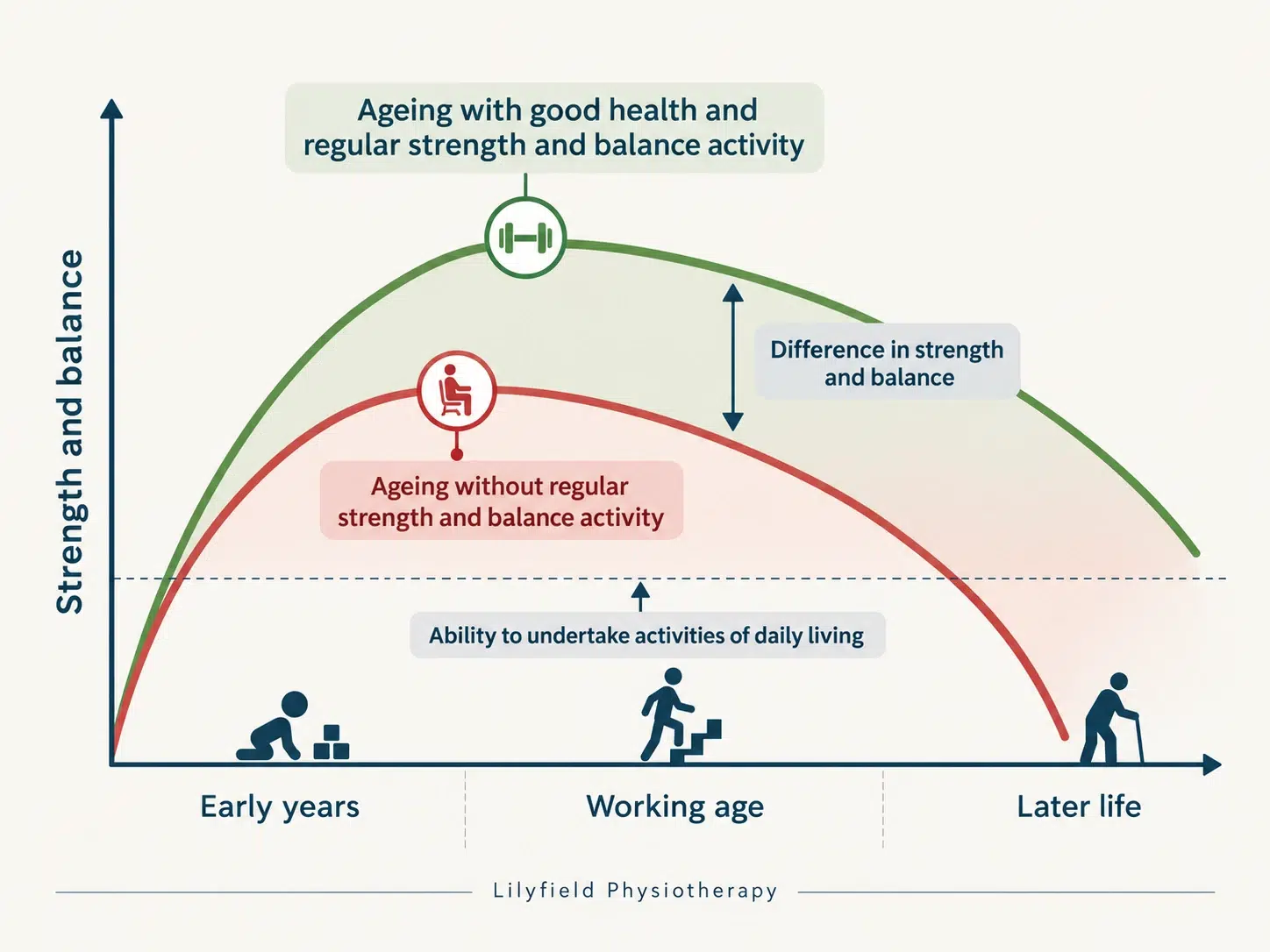
Reference: Image from UK Chief Medical Officers’ physical activity guidelines.
The encouraging news is that frailty often develops gradually, which means there may be an opportunity to act before it has a major impact on independence and quality of life. By recognising the signs early, staying physically active, maintaining muscle strength, and seeking appropriate professional guidance when needed, many people can continue to live active, confident, and independent lives for years to come.
FAQs
What Are the First Signs of Frailty in Older Adults?
Early signs may include feeling weaker than before, walking more slowly, becoming tired during everyday activities, difficulty getting out of a chair and reduced balance. These changes can develop gradually and may not be obvious at first.
Is Frailty a Normal Part of Ageing?
No. Although frailty becomes more common with age, it is not an inevitable part of getting older. Many people maintain good levels of strength, mobility and independence well into later life.
Can Frailty Be Reversed?
Some people, particularly those experiencing pre-frailty or early frailty, may improve their physical function and move to a less frail state. Exercise, good nutrition and management of underlying health conditions may contribute to these improvements. Results vary depending on individual circumstances.
Is Walking Enough to Prevent Frailty?
Walking is beneficial for mobility, cardiovascular health and general wellbeing. However, maintaining muscle strength often requires additional resistance exercise. Activities that challenge balance are also an important part of healthy ageing.
When Should You Seek Help for Frailty?
If you notice increasing weakness, slower walking, repeated falls, unexplained weight loss or difficulty with everyday activities, speak with your GP. They can assess potential medical causes and discuss appropriate support, which may include exercise physiology.
Take the Next Step Towards Healthy Ageing
Maintaining your strength and mobility starts with understanding your current physical capacity and the activities that matter most to you.
At Lilyfield Physiotherapy in Rozelle, our Accredited Exercise Physiologist can assess your strength, balance and movement and discuss an exercise plan suited to your needs.
Ready to take a proactive approach to healthy ageing? Book an exercise physiology consultation or call (02) 9810 2203 to discuss your next steps.
