
How Does Schroth Therapy Help With Scoliosis?
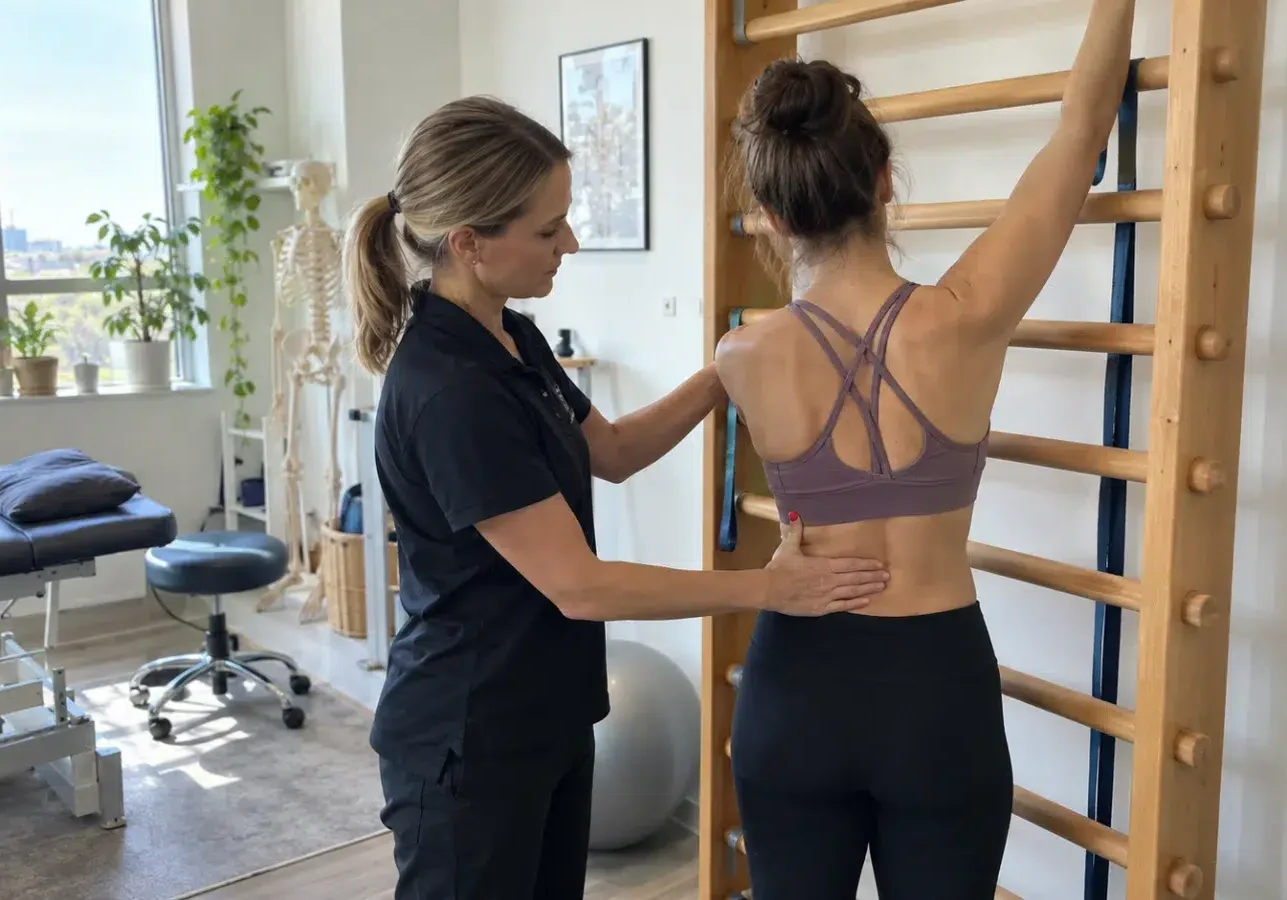
Schroth therapy helps people with scoliosis learn how to manage their spinal alignment through tailored exercises, posture correction and breathing techniques. Unlike general strengthening exercises, the Schroth Method considers the individual shape and rotation of the spine, teaching people how to actively adjust their posture during exercise and everyday activities.
It is a non-surgical approach used in scoliosis management for adolescents and adults, sometimes alongside other treatments such as bracing.
At Lilyfield Physiotherapy in Sydney’s Inner West, Senior Musculoskeletal Physiotherapist Kat Au is certified in International Schroth 3-Dimensional Scoliosis Therapy (ISST). She works with people seeking individual guidance on managing their scoliosis.
Quick summary
- Schroth therapy uses three-dimensional exercises tailored to a person’s spinal curve.
- For adolescents, it can form part of a treatment plan during growth, including alongside bracing when recommended.
- For adults, exercises focus on posture, spinal control, movement and individual functional goals.
- Treatment is personalised according to spinal curvature, age, symptoms and physical ability.
- Research supports its use, particularly in adolescent idiopathic scoliosis, although outcomes vary and evidence for adults is more limited.
What Is Schroth Therapy?
The Schroth Method is a physiotherapy approach developed by Katharina Schroth in 1921. It uses scoliosis-specific exercises to address the three-dimensional changes associated with spinal curvature.
Scoliosis is often described as a sideways curve of the spine, but it also involves rotation of the vertebrae and changes in the position of the ribcage and trunk.
Schroth therapy addresses these different dimensions through individual exercise techniques rather than treating every spinal curve in the same way.
The approach focuses on:
- Three-dimensional postural correction: Learning how to elongate, position and actively adjust the trunk according to the spinal curve.
- Rotational breathing: Using guided breathing techniques to encourage awareness and movement of different areas of the ribcage.
- Muscle activation and spinal stability: Practising controlled movements that support the corrected posture.
- Postural awareness: Learning to recognise and adjust body positioning during sitting, standing and everyday activities.
The exercises are selected according to the person’s particular curve pattern, movement abilities and treatment goals.
How Does Schroth Therapy Work for Scoliosis?
Schroth therapy combines several techniques to help people understand and actively manage their spinal posture.
1. Three-Dimensional Posture Correction
Because scoliosis involves changes in several directions, simply trying to stand straighter does not address the full spinal curve.
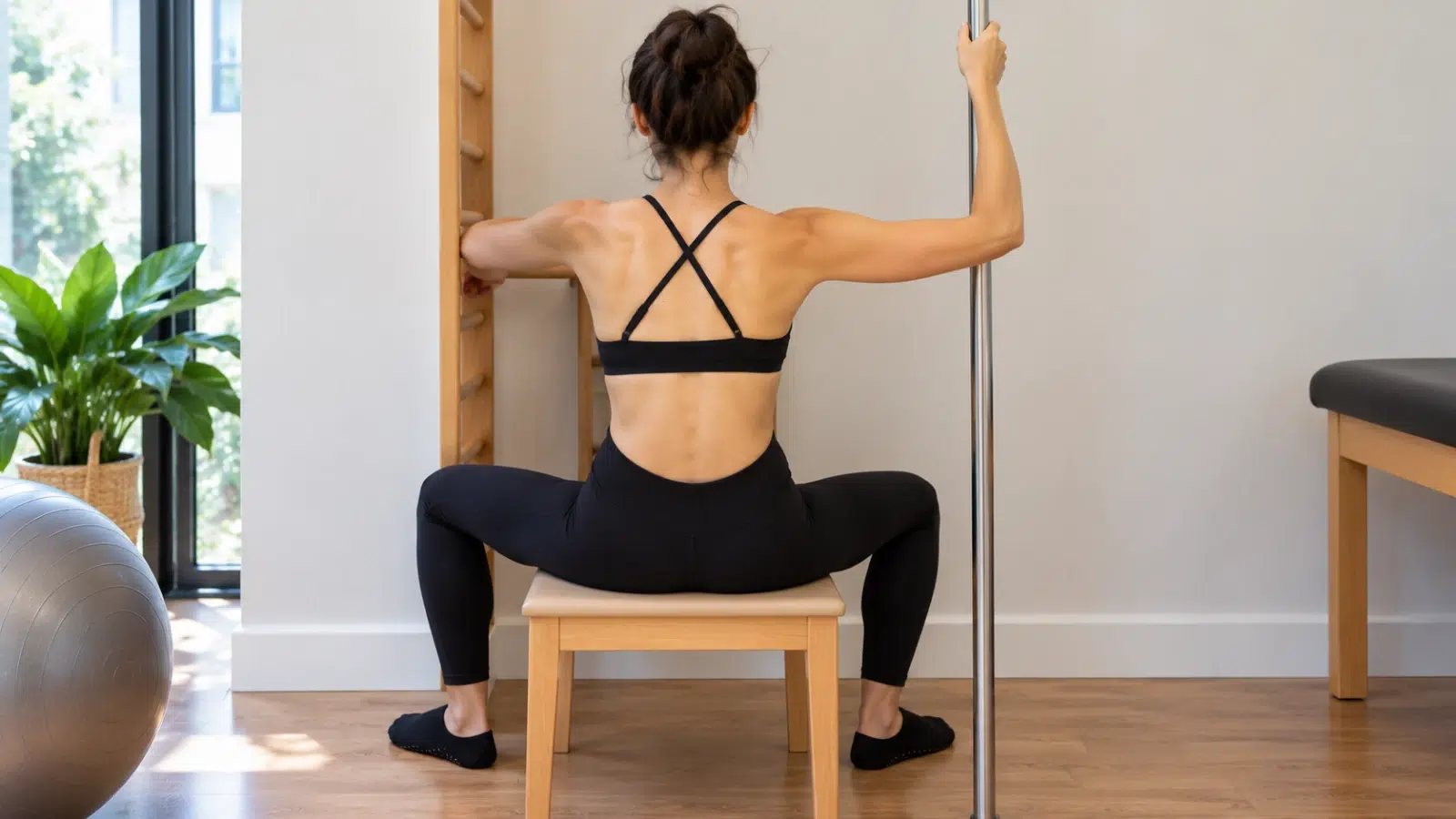
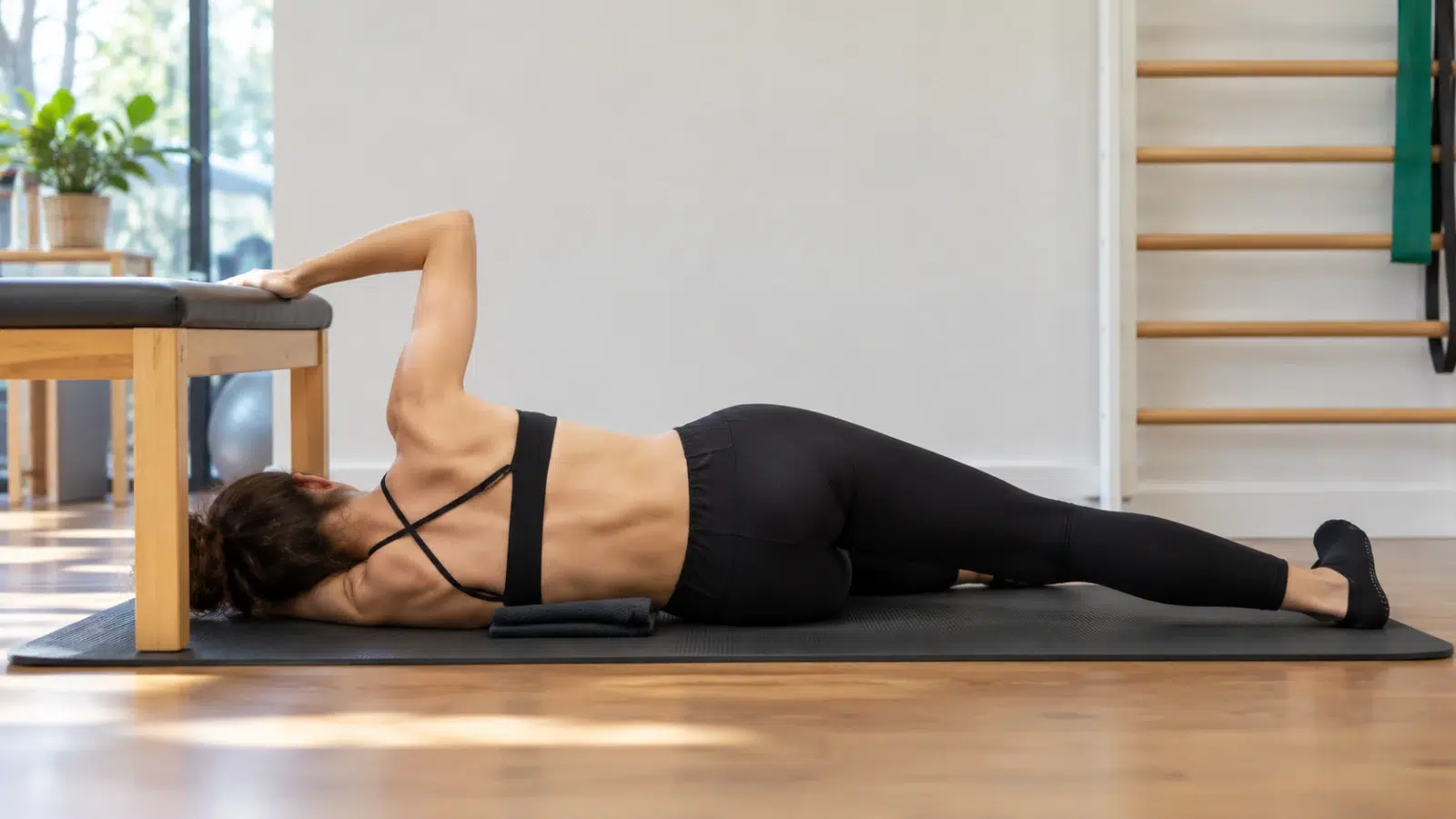
Schroth exercises teach people how to make specific adjustments to their trunk, including elongation, rotation and sideways positioning.
These corrections are guided by the individual’s spinal curve and practised in positions suited to their abilities.
2. Rotational Breathing Techniques
Scoliosis can change the shape and movement of the ribcage, particularly when the curve involves the thoracic spine.
Schroth therapy incorporates rotational breathing, which involves directing breathing towards particular areas of the chest while maintaining a corrected posture.
This technique is used to develop awareness and control of ribcage positioning and movement.
3. Muscle Activation and Stability
Schroth exercises also involve activating and coordinating muscles around the spine and trunk.
Rather than simply strengthening one side of the body, the exercises are designed around the individual’s posture, curve pattern and movement control.
They may be performed lying down, sitting or standing, with resistance or positioning aids introduced when appropriate.
4. Applying Corrections to Everyday Movement
Learning the exercises is only one part of the Schroth approach.
Patients are also taught how to use appropriate postural corrections during daily activities, such as sitting at a desk, standing, walking or completing household tasks.
The aim is to build awareness and make the exercises practical outside the physiotherapy clinic.
How Can Schroth Therapy Support Adolescents With Scoliosis?
Adolescent idiopathic scoliosis commonly develops or becomes noticeable during periods of rapid growth.
During these years, monitoring spinal curvature is particularly important because some curves can progress as the spine grows.
Schroth therapy is one form of physiotherapeutic scoliosis-specific exercise recommended in the SOSORT guidelines for conservative scoliosis management.
For adolescents, a Schroth program may focus on:
- Learning active spinal correction: Understanding how to position the spine and trunk during guided exercises.
- Developing postural awareness: Recognising changes in shoulder, ribcage and pelvic positioning.
- Practising spinal stability: Building control of corrected positions through progressively challenging exercises.
- Supporting brace treatment: Incorporating suitable exercises alongside bracing when recommended by the treating medical team.
- Building independent exercise habits: Learning a home program that can be maintained and adjusted throughout growth.
Schroth therapy does not replace medical monitoring or bracing when either is indicated.
An adolescent’s treatment plan depends on several factors, including their Cobb angle, remaining growth, curve pattern and risk of progression.
How Can Schroth Therapy Support Adults With Scoliosis?
Scoliosis can also affect adults, either because a curve developed earlier in life or because age-related changes in the spine contribute to a new curvature.
Some adults experience back discomfort, stiffness or difficulty with particular activities, while others have few symptoms.
Schroth exercises for adults are adapted to their existing spinal curve, mobility, physical capacity and individual goals.
Treatment may focus on:
- Postural control: Practising positions and movements appropriate to the individual’s spinal alignment.
- Movement and mobility: Working on controlled spinal and trunk movements within a comfortable range.
- Strength and endurance: Developing an exercise program that considers everyday physical demands.
- Breathing awareness: Using rotational breathing where appropriate to the person’s ribcage movement.
- Daily activities: Applying exercise principles to work, walking, recreation and other activities that matter to the individual.
For adults experiencing discomfort, Schroth therapy may be considered as part of a broader physiotherapy for back pain and scoliosis management plan.
The available research is stronger for adolescents than adults. Schroth therapy should not be presented as a guaranteed way to reduce an established adult spinal curve or prevent further degeneration.
What Does Research Say About Schroth Therapy?
Schroth therapy is supported by clinical research, particularly studies involving adolescents with idiopathic scoliosis.
The 2016 SOSORT guidelines, published in 2018, recommend physiotherapeutic scoliosis-specific exercises as part of conservative treatment during growth. They emphasise individualised exercise programs, three-dimensional correction, postural stability and patient education.
Several clinical trials have examined Schroth exercises:
- Schreiber et al. (2015) studied 50 adolescents and reported improvements in back muscle endurance and some patient-reported measures when supervised Schroth exercises were added to standard care.
- Kuru et al. (2016) compared supervised Schroth exercises, home exercises and a control group. The supervised group showed improvements in some measurements of spinal curvature and trunk rotation.
- Schreiber et al. (2017) reported better Cobb angle outcomes over six months when Schroth exercises were added to standard care compared with standard care alone.
These findings are encouraging, but they do not mean everyone will experience the same changes.
Research reviews have also identified differences in how Schroth exercises are delivered and studied. More high-quality research is needed, particularly to understand long-term outcomes and the role of Schroth therapy in adult scoliosis.
What Happens During a Schroth Therapy Assessment?
Schroth therapy begins with an individual assessment rather than a standard exercise routine.
At Lilyfield Physiotherapy, Kat considers the person’s scoliosis history, spinal curve, symptoms, movement abilities and goals.
An assessment may involve:
- Reviewing your medical history: Discussing your diagnosis, symptoms, previous treatment and relevant X-rays or specialist reports.
- Assessing your posture and movement: Looking at spinal alignment, trunk rotation, mobility and movement control.
- Understanding your curve pattern: Identifying the spinal characteristics that help guide exercise selection.
- Introducing Schroth exercises: Teaching appropriate correction techniques, breathing and movement strategies.
- Planning home exercises: Developing a manageable program that fits your routine, with reviews and adjustments as required.
Schroth therapy is individualised, so the exercises and frequency of appointments will depend on your circumstances.
You can also learn more about Lilyfield’s approach to physiotherapy for scoliosis.
Meet Kat Au, ISST-Certified Schroth Therapist
Kat Au is a Senior Musculoskeletal Physiotherapist at Lilyfield Physiotherapy, with a Master of Clinical Musculoskeletal Physiotherapy from Curtin University.
She has worked across hospital and private physiotherapy settings and holds physiotherapy registration in Australia and Hong Kong.
Kat has completed certification in the International Schroth 3-Dimensional Scoliosis Therapy (ISST) method, along with refresher training. Scoliosis management in adolescents and adults is one of her clinical areas of interest.
Her approach combines careful assessment, scoliosis-specific exercise and practical education, helping patients understand their condition and participate actively in their treatment.
References
- Negrini, S., et al. (2018). 2016 SOSORT guidelines: Orthopaedic and rehabilitation treatment of idiopathic scoliosis during growth. Scoliosis and Spinal Disorders, 13, 3.
- Schreiber, S., et al. (2015). The effect of Schroth exercises added to the standard of care on the quality of life and muscle endurance in adolescents with idiopathic scoliosis. Scoliosis, 10, 24.
- Kuru, T., et al. (2016). The efficacy of three-dimensional Schroth exercises in adolescent idiopathic scoliosis: A randomised controlled clinical trial. Clinical Rehabilitation, 30(2), 181–190.
- Schreiber, S., et al. (2017). Schroth physiotherapeutic scoliosis-specific exercises added to the standard of care lead to better Cobb angle outcomes in adolescents with idiopathic scoliosis. PLOS ONE, 11(12), e0168746.
- Schroth Physiotherapeutic Scoliosis-Specific Exercise Trials: Systematic Review of Methods and Recommendations for Future Research. Children, 2023.
FAQs
Can Schroth Therapy Straighten a Scoliotic Spine?
Schroth therapy teaches active three-dimensional postural correction. Some studies involving adolescents have reported improvements in measured spinal curvature, but this does not mean treatment will completely straighten the spine. Results depend on the individual, and structural curves may remain.
Is Schroth Therapy Suitable for Adults With Scoliosis?
Schroth exercises can be adapted for adults with scoliosis, including people whose spinal curve has been present since adolescence. The suitability of treatment depends on symptoms, spinal changes, mobility and individual goals.
Can Schroth Therapy Replace a Scoliosis Brace?
No. Schroth exercises may be included alongside bracing, but they should not replace a brace prescribed by a medical specialist. Bracing decisions depend on factors such as curve severity and remaining growth.
How Often Should You Do Schroth Exercises?
Schroth programs typically involve supervised instruction and regular home practice. The appropriate exercise frequency and duration depend on the person’s curve pattern, age, physical capacity and treatment plan. Your treating physiotherapist can help establish a practical routine.
Do You Need an X-Ray Before Starting Schroth Therapy?
X-rays are commonly used to confirm structural scoliosis and measure the Cobb angle. If you already have relevant imaging, bringing your reports to the assessment can help inform treatment planning. Your physiotherapist and medical team can advise whether further imaging is needed.
What Is the Difference Between Schroth Therapy and General Physiotherapy?
General physiotherapy can include strength, mobility and movement exercises for a range of conditions. Schroth therapy is a particular scoliosis-specific approach that uses individual curve classification, three-dimensional postural correction and rotational breathing techniques.
Explore Schroth Therapy at Lilyfield Physiotherapy
Whether you have recently received a scoliosis diagnosis or are looking for guidance on managing an existing spinal curve, understanding your options is a useful first step.
At Lilyfield Physiotherapy in Rozelle, Kat Au provides individual scoliosis assessments and Schroth therapy for adolescents and adults.
Book an appointment or call (02) 9810 2203 to discuss your needs and take the next step towards confident movement.
