
About Our Workers Compensation Rehabilitation in Inner West Sydney
Our workers compensation rehabilitation in Inner West Sydney combines exercise physiology and physiotherapy to help people recover from workplace injuries and prepare for a safe, sustainable return to work.
Accredited Exercise Physiologist Angel Nang works alongside Principal Physiotherapist Karen Westcott and physiotherapists Niamh Davies and Gurasees Bajwa. Your clinician will consider your injury, current restrictions, physical capacity and the demands of your role before developing your rehabilitation plan.
Workplace injuries can result from a single incident or develop over time through repetitive movements, lifting, prolonged positions and other physical demands. Your program may include strength training, cardiovascular conditioning, mobility work and practice of job-related movements. We can also communicate with relevant members of your support team when appropriate and authorised.
You'll find us at:
Our Workers Compensation Rehabilitation Services & Fees
Recover through a structured exercise program designed around your injury, current work capacity and return-to-work goals.
Workers compensation treatment fees and approval requirements differ from standard private appointments. They depend on your claim, insurer approval, the service provided and the applicable NSW workers compensation requirements.
Before your first appointment, please contact our team with your claim number, insurer details and any referral or approval documents you have received. We can confirm what information is required and whether the proposed service can be billed through your claim.
If treatment has not been approved under your claim, you may be responsible for the appointment fee. Our team will discuss this with you before treatment begins.
Our Approach
At Lilyfield Physio, workers compensation rehabilitation focuses on helping you regain useful movement and prepare for the physical demands of your role. We build your program around your injury, current restrictions and recovery goals.
- Personalised assessment: We assess your injury, physical capacity, work duties and the activities you currently find difficult.
- Clear rehabilitation goals: Your program focuses on measurable goals connected to work and daily function.
- Tailored exercise prescription: Exercises, loads and training volume reflect your current capacity and medical guidance.
- Work-specific conditioning: We introduce movements and physical demands related to your role when appropriate.
- Progressive rehabilitation: We adjust the program as your strength, fitness, movement and task tolerance improve.
- Recovery team communication: With your consent, we can provide relevant updates to authorised members of your recovery team when required.
Your rehabilitation plan will change as you progress. We use regular reviews to decide when to increase exercise, introduce more demanding tasks or recommend further medical assessment.

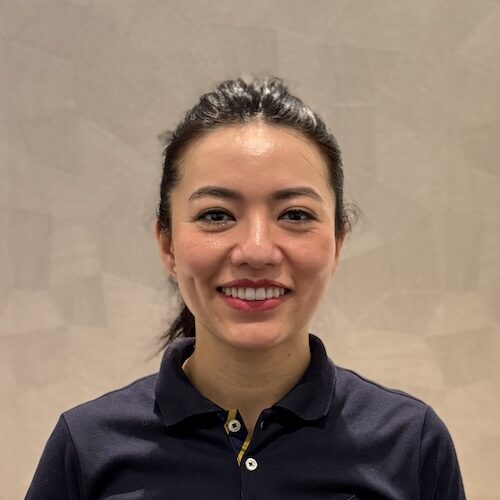
Meet Angel Nang
Accredited Exercise Physiologist
Angel is an Accredited Exercise Physiologist with an interest in helping people rebuild strength, improve their physical capacity and return to meaningful activities with greater confidence. She graduated from the University of Sydney in 2022 with a Bachelor of Exercise Physiology.
Angel takes time to understand how an injury affects each person's work, daily life and confidence with movement. She uses strength-based rehabilitation and gradual conditioning to help clients work towards practical goals at a manageable pace.
Her approach can support people who need to rebuild strength and fitness after an injury or period away from normal activity. Outside the clinic, Angel enjoys running by the Bay and keeping up with developments in running shoe technology.
FAQs
Exercise physiology can help you rebuild the strength, fitness, movement and task tolerance required for your role. Your program will reflect your injury, current restrictions and the physical demands you need to manage at work.
Your clinician begins by assessing your injury, current symptoms, movement, strength, fitness and work requirements. They then develop an exercise plan with measurable goals and progression steps suited to your stage of recovery.
The most suitable exercises depend on your injury and job. Your program may combine strength, cardiovascular fitness, mobility and work-related movement rather than relying on one exercise or a generic routine.
No clinician can guarantee a faster return to work. Exercise physiology can support your recovery by building the physical abilities needed for your role and helping you progress through suitable rehabilitation stages.
Physiotherapy may focus on assessing an injury, managing symptoms and restoring movement during the earlier stages of recovery. Exercise physiology focuses on structured exercise to rebuild strength, fitness and physical capacity. Some people move between both services as their recovery progresses.
It may help when repeated movements or sustained positions have contributed to pain and reduced function. Your clinician can assess your current capacity and develop exercises that build strength, movement control and tolerance for relevant tasks.
Yes. Your clinician can use information about your duties to select relevant movements and conditioning exercises. A formal workplace assessment or change to your duties may require input from your employer, doctor, insurer or workplace rehabilitation provider.
Workers compensation treatment has different referral, approval and documentation requirements from private treatment. Contact our team before booking so we can check your claim details and explain what documents you need to provide.
It depends on your claim, when treatment begins and the services requested. Some services require insurer approval before treatment continues. Our team can review the information you have received and confirm the next step with you.
An insurer may cover approved treatment connected to an accepted workers compensation claim. Approval and billing arrangements vary, so contact us before your first session. You may need to pay the appointment fee if treatment is not approved under your claim.
Please bring your claim number, insurer and case manager details, referral or approval documents, Certificate of Capacity and any relevant scan, X-ray or medical reports. Wear comfortable clothing and suitable footwear so you can move during the assessment.
Your clinician will discuss your injury, treatment history, work duties, current restrictions and recovery goals. They will then assess relevant areas such as movement, strength, mobility, balance and fitness.
You will discuss the initial rehabilitation plan and may begin suitable exercises during the session. Your clinician will explain how the program relates to your work and how progression will be measured.
We may communicate with authorised members of your recovery team when this supports your care or meets claim requirements. We will explain what information needs to be shared and obtain consent where required.
The timeframe depends on your injury, role, treatment history, current capacity and response to rehabilitation. We track functional progress and work-related goals rather than applying the same timeline to every person.
Yes, if exercise physiology is suitable and the service has the required approval. Early rehabilitation may focus on restoring movement, strength and general fitness before introducing more demanding work-related exercises.
It depends on your remaining restrictions, recovery goals and insurer approval. Rehabilitation may continue while you build tolerance for longer hours, heavier duties or your pre-injury role.
Tell your clinician if your symptoms change during or after exercise. They can review the response, adjust the program and decide whether you need further assessment or advice from your doctor.
We accept cash, EFTPOS, Visa and Mastercard for appointments that require direct payment. Contact our team before attending to confirm whether your workers compensation appointment has approval and how it will be billed.
You can cancel or reschedule by calling our rooms on (02) 9810 2203. An answering machine is available after hours.
Please give us at least 24 hours' notice if you cannot attend. A $90 fee applies to appointments cancelled within 24 hours of the scheduled time. Insurers may not cover late cancellation or missed appointment fees.
Lilyfield Physiotherapy collects the information needed to provide appropriate healthcare, manage appointments and meet relevant workers compensation requirements. We take care to keep your records accurate, current and private.
We may need to share relevant information with authorised members of your recovery team, such as your nominated treating doctor, insurer or case manager. We will handle your information according to applicable privacy requirements and seek your consent where required.
Please speak with your treating Physiotherapist or Exercise Physiologist if you would like to discuss the clinic's privacy practices or request access to your health records.