
What Is Dry Needling?
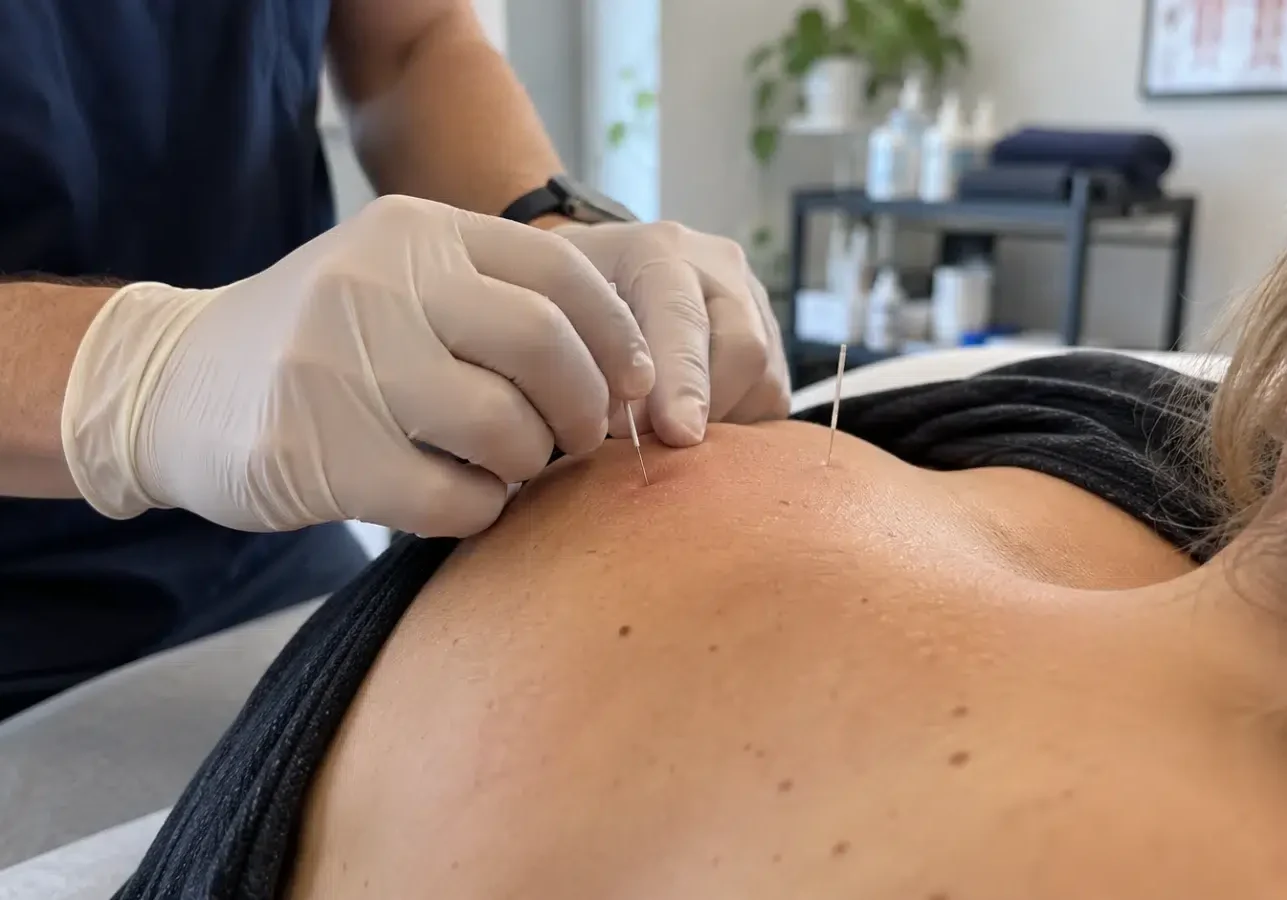
Dry needling is a technique physiotherapists use to stimulate specific areas of muscle and surrounding tissue using very fine, solid needles. It is often used to help manage muscle-related pain and sensitivity as part of a broader physiotherapy treatment plan.
Dealing with tight, sore muscles and wondering if dry needling could help? It’s a great question, and one we’re often asked at Lilyfield Physiotherapy.
So how does dry needling work, what does it feel like, and is it right for you?
Quick summary
- What it is: Dry needling uses fine, solid needles to stimulate sensitive areas of muscle and surrounding tissue.
- How it works: It stimulates muscle tissue and sensory nerves, which may influence how the nervous system processes pain.
- Common uses: Physiotherapists may consider dry needling for muscle-related neck, shoulder, back, arm and leg pain.
- What to expect: You may feel a small prick, dull ache or brief muscle twitch. Temporary soreness or mild bruising can occur.
- Treatment approach: Dry needling is generally used alongside physiotherapy, exercise and movement rehabilitation rather than as a standalone treatment.
What Are Trigger Points?
Dry needling is most often used to treat sensitive spots within muscles known as myofascial trigger points.
A trigger point is a tender area in a muscle that can reproduce familiar pain when pressed. Sometimes that pain is felt at the trigger point itself. Other times it is felt elsewhere in the body, which is known as referred pain.
For example, trigger points in the muscles of the neck and upper shoulders can contribute to neck pain or stiffness when turning your head. Similarly, sensitive muscles around the shoulder or lower back can cause pain that affects everyday tasks.
Dry needling targets these areas as part of a treatment approach aimed at managing pain and supporting more comfortable movement.
How Does Dry Needling Work?
Dry needling stimulates muscle tissue and sensory nerves. This may influence pain sensitivity and change how the nervous system processes pain.
During treatment, you may feel a brief muscle twitch, called a local twitch response. This is an involuntary reaction of the muscle to the needle. Not everyone experiences it, and a twitch isn’t needed for treatment to be effective.
The aim is to address sensitive areas contributing to your symptoms so you can progress with your rehabilitation.
Is Dry Needling the Same as Acupuncture?
Dry needling and acupuncture both use very fine, solid needles, but they come from different traditions and work on different principles.
Acupuncture comes from Traditional Chinese Medicine. Needles are traditionally placed at specific points along pathways called meridians, with the aim of restoring the flow of energy through the body.
Dry needling is based on Western anatomy and neurophysiology. Your physiotherapist assesses your muscles and movement, then places needles into the muscle tissue and trigger points they find to be contributing to your pain.
The word “dry” means nothing is injected; the needle itself provides the treatment.
At Lilyfield Physiotherapy, dry needling is one part of a physiotherapy treatment plan rather than a standalone therapy.
What Is Dry Needling Used For?
Physiotherapists may consider dry needling for muscle-related symptoms affecting different areas of the body, including:
- Neck pain and muscle tension: Tight, sensitive muscles in the neck and upper shoulders can cause discomfort and limit how far you can turn your head.
- Shoulder pain: Sensitivity in the muscles around the shoulder and shoulder blade can make reaching overhead, lifting or exercising painful.
- Arm and elbow pain: Sensitive muscles in the upper arm or forearm can affect gripping, lifting and repetitive tasks.
- Lower back pain: Dry needling may be considered for muscle-related back pain that affects bending, walking and daily movement.
- Thigh and calf pain: For active people, muscle sensitivity can affect walking, running, gym training and sport.
Dry needling isn’t suitable for every person or every condition. Your physiotherapist will assess your symptoms, medical history and goals to decide whether it’s a good option for you.
What Does Dry Needling Feel Like?
The needles are very fine, and the sensation varies from person to person. You may feel a small prick, a dull ache or a brief twitch in the muscle.
Some people have temporary muscle soreness, mild bruising or slight bleeding afterwards, which usually settles within a day or two.
Your physiotherapist will explain what to expect, screen for any precautions and obtain your informed consent before treatment.
Why Combine Dry Needling With Physiotherapy?
Dry needling is generally used as part of a broader treatment plan. Managing pain matters, but the broader goal is to help you move better, build strength and return to the activities that matter to you.
Depending on your condition, your physiotherapy treatment may also include:
- Strengthening exercises to build muscle capacity and support your joints.
- Movement retraining to help you move with confidence and control.
- Manual therapy to help manage symptoms where appropriate.
- Education and activity advice so you understand your symptoms and can manage your recovery.
Combining different approaches allows your physiotherapist to develop a treatment plan based on your symptoms, movement and rehabilitation goals.
FAQs
Does Dry Needling Involve an Injection?
No. Dry needling uses fine, solid needles without injecting medication or other substances into the body. The needle itself is used to stimulate the targeted tissue.
Does Dry Needling Hurt?
The sensation varies from person to person. You may feel a small prick as the needle enters the skin, followed by a dull ache or brief muscle twitch. Your physiotherapist will explain what to expect before treatment.
How Long Does Soreness Last After Dry Needling?
Temporary muscle soreness is common and usually settles within a day or two. Mild bruising or slight bleeding can also occur. If you experience unusual or worsening symptoms, contact your treating clinician for advice.
How Many Dry Needling Sessions Will I Need?
There isn’t a set number of sessions that suits everyone. Your physiotherapist will consider your symptoms, medical history, treatment goals and response to previous treatment before recommending whether further sessions are appropriate.
Is Dry Needling Suitable for Everyone?
No. Dry needling isn’t suitable for every person or condition. Your physiotherapist will review your medical history, discuss potential risks and precautions, and assess whether dry needling is appropriate for your situation.
Is Dry Needling Right for You?
At Lilyfield Physiotherapy, we look beyond the painful area to understand what may be contributing to your symptoms and what you want to get back to doing.
Our senior musculoskeletal physiotherapist, Kat Au, offers dry needling as part of individual physiotherapy care. If dry needling suits your presentation, we’ll build it into a treatment plan designed around your goals.
Wondering whether dry needling could help you? Book an appointment with our physiotherapists in Inner West Sydney and we will help you find the right approach for your recovery.
